In 2026, OEMs and system integrators are being asked to deliver wider speed ranges from the same drivetrain — without upsizing the motor, inverter, or cooling system. The IPM electric motor has become the preferred architecture for applications that need a longer constant-power region above base speed, precisely because its rotor topology supports more effective field weakening than surface-mount alternatives. For procurement teams planning a PMSM buy, the challenge is separating marketing claims from what actually determines field-weakening performance: rotor magnetic circuit design, control strategy, inverter voltage margin, and thermal limits.
The pain point is specific. When a conventional motor hits its base speed, back-EMF rises to the inverter voltage limit and torque drops sharply. The machine hits a speed ceiling. To go faster, the OEM either upsizes the motor and inverter — increasing BOM cost, footprint, and energy consumption at partial load — or adds a gear change, reintroducing mechanical complexity. Neither outcome is acceptable when the project goal is a single motor platform covering both low-speed torque and high-speed power across multiple performance tiers.
Why the IPM Rotor Structure Enables Better Field Weakening
Base Speed vs. Field Weakening: The Core Concept
Below base speed, a PMSM operates in torque-focused mode: the inverter delivers rated current at increasing voltage as speed rises, producing rated torque. At base speed, the back-EMF generated by the rotating permanent magnets reaches the inverter's voltage limit. Without intervention, further speed increase is impossible.
Field weakening is the control strategy that extends operation above base speed. By injecting a negative d-axis current component, the controller partially cancels the magnet flux, reducing back-EMF and allowing the motor to accelerate beyond base speed. The trade-off is reduced torque — but if the power (torque × speed) is maintained, the motor operates in a constant-power region that extends the usable speed range without hardware changes.
Why the IPM Architecture Supports This Better
The interior permanent magnet design embeds magnets inside the rotor lamination stack rather than on the surface. This creates a magnetic saliency — a difference in inductance between the d-axis and q-axis — that surface-mount designs do not have. That saliency has two consequences relevant to field weakening:
First, the higher d-axis inductance of an IPM rotor means that a given field-weakening current produces a larger flux reduction, allowing more effective back-EMF management at high speed with less current penalty. Second, the saliency enables reluctance torque — torque produced by the rotor's tendency to align with the stator field — which supplements the magnet torque and helps maintain power output across the field-weakening region.
The result is a motor that can extend its constant-power range significantly above base speed with a properly configured inverter and control system — enabling wide-speed operation from a single motor frame that would otherwise require a larger motor or a gearbox change.
The Control Layer That Makes It Real
Field weakening performance is not determined by the motor alone. The inverter must have sufficient voltage margin above the motor's back-EMF at maximum speed. The control algorithm must implement field-oriented control (FOC) with stable d-axis current regulation across the full speed range. A feedback device — encoder or resolver — is typically required for reliable rotor position tracking at high speed. Without these system-level conditions, the motor's field-weakening capability cannot be realized in practice.
Key Specifications for Wide-Speed IPM Electric Motor Performance
| Specification Parameter | What to Define | Why It Matters for Field Weakening |
|---|
| Base speed and maximum speed | RPM at rated torque; RPM at top of constant-power range | Defines the required field-weakening ratio; drives rotor and control design |
| Constant-power range target | Speed ratio: max speed ÷ base speed | Determines how aggressive the field weakening must be; affects magnet and inductance design |
| DC bus / inverter voltage | Available voltage at motor terminals | Voltage margin above back-EMF at max speed is the hard limit on field-weakening range |
| Rated and peak torque | Continuous and overload torque at base speed | Sizes the motor thermally and magnetically |
| Back-EMF at base speed | Volts per RPM (motor constant) | Must leave adequate voltage margin for field weakening current at max speed |
| Cooling method | TEFC, forced ventilation, liquid cooling | High-speed operation with field weakening increases losses; thermal margin must be confirmed |
| Rotor mechanical limit | Maximum RPM for rotor structural integrity | Must exceed target max speed with appropriate safety margin |
| Bearing selection | Speed rating, load capacity, lubrication method | High-speed operation requires bearings rated for the actual max RPM |
| Feedback device | Encoder or resolver | Required for stable FOC and field weakening control at high speed |
| Insulation class | Class F or H | High-speed field weakening increases copper losses; thermal margin matters |
Thermal and Mechanical Constraints at High Speed
The two most common technical failures in wide-speed IPM drive applications are thermal and mechanical. On the thermal side, field weakening increases the d-axis current component, which adds copper losses without producing proportional torque. At high speed and high field-weakening depth, the motor's thermal load can exceed what the cooling system was sized for at rated conditions. Forced ventilation or liquid cooling is often required for applications with extended operation at high field-weakening depth.
On the mechanical side, rotor stress at maximum speed must be verified. The centrifugal forces on the rotor laminations and magnet retention structures increase with the square of speed. Bearing selection must account for the actual maximum RPM, not just the rated speed. Rotor balancing quality affects vibration at high speed, and critical speed analysis should confirm that the operating speed range does not coincide with a structural resonance.
Where IPM Electric Motor Field Weakening Delivers the Most Value
Industrial Variable-Speed Drives Needing Wide Turndown
For industrial spindles, compressors, centrifugal pumps, and high-speed fans, the ability to operate across a wide speed range from a single motor platform directly reduces SKU count and simplifies product line management. An OEM that previously needed two or three motor frame sizes to cover a speed range can consolidate to one IPM platform with field weakening — reducing BOM complexity, spare parts inventory, and engineering variation across product variants.
For extrusion and process lines where throughput flexibility requires a wide screw or roll speed window, the IPM motor's extended constant-power range allows the process to operate at higher speeds without hitting a torque or power ceiling that would otherwise require a motor or gearbox change.
Electrified Mobility and Traction-Style Duty Profiles
Drives that require strong launch torque at low speed and sustained power at high speed — traction applications, electrified industrial vehicles, and test dynamometers — are the canonical field-weakening application. The IPM architecture's combination of high torque density at low speed and extended constant-power range at high speed matches this duty profile directly. Efficiency across the full operating map is a lifecycle cost driver in these applications, and the IPM motor's reluctance torque contribution helps maintain efficiency in the field-weakening region where a surface-mount motor would show a more significant efficiency drop.
What Success Looks Like
Extended constant-power range without motor or inverter upsizing
Stable high-speed operation without voltage saturation trips or thermal shutdowns
Reduced SKU count — one motor platform covering multiple performance tiers in a product line
Measurable energy saving from operating closer to optimal efficiency points across a broader speed map
Selection Guide: Specifying an IPM Electric Motor for Field Weakening
7-Step RFQ Workflow
Step 1: Define the load torque versus speed curve across the full operating range, including peak overload torque and duration. Include load inertia for VFD sizing.
Step 2: Define base speed and required maximum speed. Calculate the constant-power range ratio (max speed ÷ base speed) — this is the primary field-weakening design parameter.
Step 3: Confirm the DC bus voltage and inverter current and voltage limits. The voltage margin above back-EMF at maximum speed is the hard constraint on field-weakening range.
Step 4: Confirm the control architecture — FOC with encoder or resolver feedback is standard for stable field-weakening operation. Confirm braking provision if the load can overhauling the motor at high speed.
Step 5: Confirm cooling method and ambient conditions. Verify that the thermal design covers the actual loss profile in the field-weakening region, not just at rated conditions.
Step 6: Verify mechanical limits — maximum RPM for rotor structural integrity, bearing speed rating, rotor balance grade, and critical speed analysis.
Step 7: Agree on acceptance tests — speed range validation across the full constant-power region, temperature rise at maximum field-weakening depth, vibration measurement at maximum speed, and efficiency map verification at key operating points.
Common Pitfalls
Specifying maximum speed without confirming inverter voltage margin at that speed
Sizing the cooling system for rated conditions only, without accounting for field-weakening losses
Underestimating rotor mechanical stress at maximum speed, particularly for high speed-ratio applications
Maintenance and TCO: Why Field Weakening Reduces Total System Cost
Where TCO Improves
The primary TCO benefit of an IPM electric motor with field weakening is avoided hardware cost. A motor platform that covers a wide speed range without upsizing eliminates the cost of a larger motor frame, a larger inverter, and in some cases a gearbox change. For OEMs managing product lines across multiple performance tiers, consolidating to a single IPM platform reduces engineering variation, spare parts inventory, and procurement complexity.
Energy efficiency across the operating map is the second TCO lever. The IPM motor's reluctance torque contribution helps maintain efficiency in the field-weakening region, reducing energy consumption at high-speed operating points compared with a surface-mount motor or an oversized induction motor running at partial load.
Maintenance Focus Points for High-Speed IPM Drives
| Maintenance Item | Focus for High-Speed Operation |
|---|
| Bearing condition monitoring | Vibration and temperature monitoring; lubrication interval matched to actual speed and load |
| VFD health | Cooling filter cleaning, DC bus capacitor condition, parameter verification |
| Alignment and vibration | High speed magnifies small mechanical imbalances; periodic vibration check is important |
| Feedback device | Encoder or resolver calibration and cable integrity; critical for stable FOC at high speed |
Conclusion: Field Weakening Is the Difference Between a Speed Ceiling and a Speed Range
If your 2026 project needs a wider speed window, field weakening is the difference between a motor that performs on paper and one that operates stably at maximum RPM. A properly specified IPM electric motor — matched to the inverter voltage margin, control architecture, cooling system, and mechanical limits — can extend the constant-power range above base speed and deliver wide-speed performance from a single motor frame.
For a confident PMSM buy, the motor specification and the system specification must be developed together. The rotor topology enables the field-weakening capability. The inverter, control algorithm, feedback device, and thermal design determine whether that capability is realized in the application.
Request a Recommended Configuration and Quotation
Share your speed range and drive requirements below, and our engineering team will recommend the correct IPM electric motor configuration, inverter pairing, and control strategy for your wide-speed application — with pricing matched to your power rating and volume.
Working conditions: Application type, duty cycle, ambient temperature, cooling constraints, and enclosure environment.
Quantity: Number of motors per order and whether the application is prototype, pilot, or series production.
Size and specification: Required power, torque curve (rated and peak), base speed and maximum speed, constant-power range target, supply or DC bus voltage, mounting and shaft interface, IP rating, and feedback device preference.
Target metrics: Constant-power range length, maximum speed stability, efficiency target at key operating points, NVH limits, and SKU consolidation goal.
Current problems: Speed ceiling at base speed, inverter voltage saturation trips at high speed, overheating in field-weakening operation, too many motor SKUs across a product line, or instability at maximum RPM.
FAQ
1. What is an IPM electric motor?
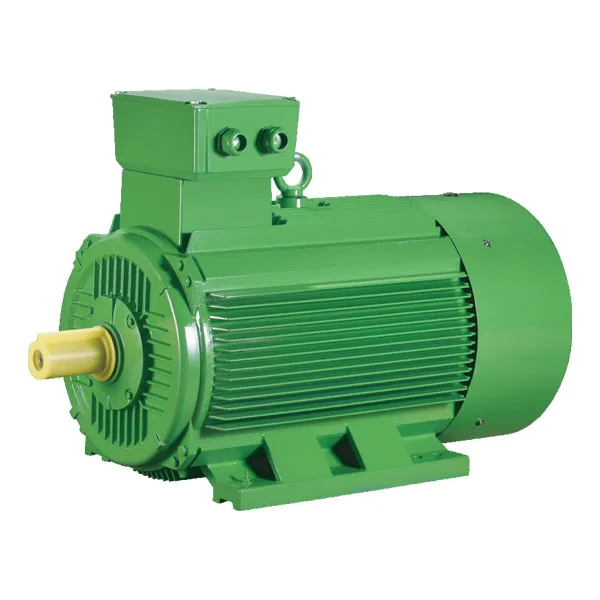
An Interior Permanent Magnet motor is a type of PMSM in which the permanent magnets are embedded inside the rotor lamination stack rather than mounted on the rotor surface. This creates magnetic saliency — a difference in d-axis and q-axis inductance — that enables more effective field weakening and allows the motor to produce reluctance torque in addition to magnet torque. The result is higher torque density, better efficiency across a wide speed range, and a longer constant-power region above base speed compared with surface-mount PM designs.
2. IPM motor vs. surface-mount PMSM or induction motor — what is the difference for wide-speed drives?
A surface-mount PMSM has lower saliency, which limits the effectiveness of field weakening and produces a shorter constant-power range for the same inverter voltage. An induction motor can also operate across a wide speed range but typically has lower efficiency and lower torque density, requiring a larger frame for the same output. The IPM motor combines the high torque density of PM technology with the saliency-enabled field weakening that extends the constant-power range — making it the preferred architecture for wide-speed industrial drives and traction applications.
3. What is the ROI of choosing an IPM motor with field weakening?
ROI comes from three sources: avoided hardware cost from not upsizing the motor or inverter to reach the required maximum speed; reduced SKU count from consolidating multiple performance tiers onto a single motor platform; and energy saving from higher efficiency across the operating map, particularly at high-speed operating points where a surface-mount or induction motor alternative would show greater efficiency loss. For OEMs managing product lines across multiple speed tiers, the SKU consolidation benefit alone is often the largest single ROI driver.
4. Do we need to modify the system to use field weakening?
Yes, at the control and inverter level. Field weakening requires a VFD with sufficient voltage and current margin, a FOC control algorithm configured for IPM motor parameters, and typically a feedback device (encoder or resolver) for stable rotor position tracking at high speed. Mechanical verification is also required: bearing speed rating, rotor balance, and critical speed analysis must all be confirmed for the target maximum speed. For new system designs, these requirements are straightforward to incorporate. For retrofits, the existing inverter and control system must be assessed for compatibility before assuming that field weakening can be enabled by software changes alone.
5. What parameters should we provide for correct selection?
Provide the following: torque-speed curve including rated torque, peak torque, and overload duration; base speed and required maximum speed; constant-power range ratio target; supply or DC bus voltage and inverter current limit; cooling method and ambient temperature; mounting flange type and shaft dimensions; IP rating; feedback device preference; run hours per year and duty cycle; and a description of current problems — such as speed ceiling at base speed, voltage saturation trips at high speed, overheating in field-weakening operation, or excessive motor SKU variants across a product line.
 English