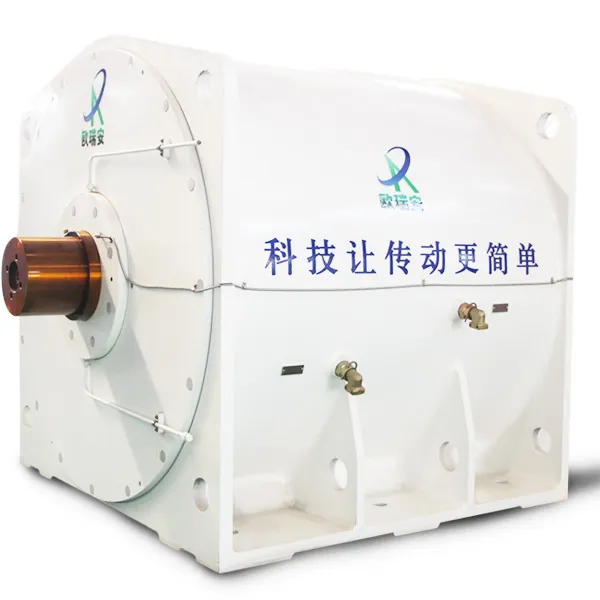
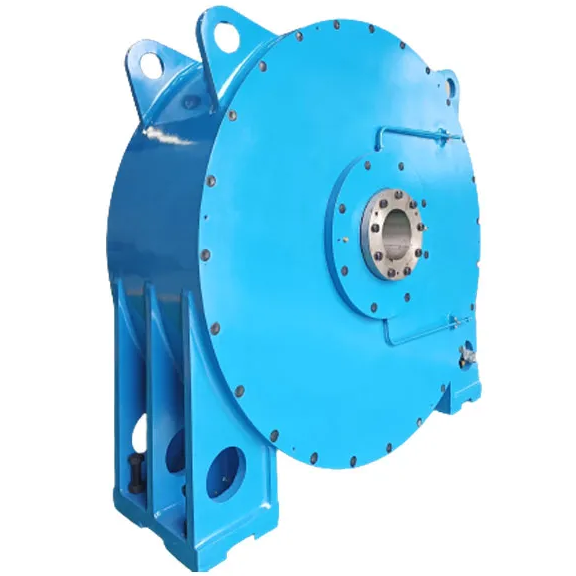
In 2026, heavy-duty plant operators running ball mills, large agitators, and industrial fans are under simultaneous pressure to cut maintenance costs, reduce unplanned downtime, and improve energy efficiency. The PMSM — permanent magnet synchronous motor — has emerged as the direct-drive solution that addresses all three pressures at once. By delivering the required low-speed torque directly at the shaft, a high-torque PMSM eliminates the gearbox that has historically been the most maintenance-intensive and failure-prone component in the drivetrain. When the rotor architecture is an interior permanent magnet synchronous motor design, the torque density and operating range are sufficient to replace multi-stage gear reduction in even the most demanding continuous-duty applications.
The pain point is well-defined. A gearbox in a high run-hour application is not just a mechanical component — it is a recurring cost center. Lubrication oil purchase, filtration, leak management, and disposal compliance generate ongoing operational expense. Gear wear, bearing failure, and alignment drift generate scheduled maintenance labor and unscheduled downtime. Spare gearbox inventory ties up capital. And the transmission losses through the gear stages — typically 2 to 5 percent per stage — represent energy that is purchased and wasted every operating hour. For a ball mill or large fan running 6,000 hours per year, those losses are a measurable and avoidable cost.
Why Gearboxes Become the Bottleneck in Heavy-Duty Equipment
The gearbox failure pattern in heavy-duty industrial equipment follows a predictable sequence. Lubrication degradation accelerates gear surface wear. Wear particles contaminate the oil, accelerating bearing degradation. Bearing clearance increases, introducing vibration that propagates through the drivetrain. By the time the failure is detectable through routine monitoring, the repair scope has expanded from a bearing replacement to a full gearbox overhaul — with the associated lead time for large-frame spare parts and the downtime cost of an unplanned stoppage.
The maintenance labor associated with gearbox management is also disproportionate to the component's function. Oil sampling, filtration checks, alignment verification, and periodic overhauls consume maintenance hours that could be directed to process equipment. In facilities with aging maintenance workforces and increasing labor costs, this overhead is a growing operational burden.
Mechanical simplification — removing the gearbox entirely — eliminates these failure modes and their associated costs. Fewer rotating components means fewer failure modes, simpler guarding, easier maintenance access, and a cleaner base design. The question is whether the motor technology exists to deliver the required torque at the required speed without the gear reduction stage. For most ball mill, agitator, and large fan applications in 2026, the answer is yes.
How High-Torque PMSM Direct Drive Works
Replacing the Reducer with Motor Torque
In a conventional drivetrain, the induction motor runs at its rated speed — typically 1,000 to 1,500 RPM — and the gearbox reduces that speed to the 50 to 200 RPM range required by the driven equipment, multiplying torque in proportion. The gearbox is necessary because the induction motor cannot produce sufficient torque at low speed to drive the load directly.
A high-torque PMSM changes this equation. The permanent magnets in the rotor provide a high air-gap flux density without rotor copper losses, enabling the motor to produce high torque at low speed with high efficiency. The motor is sized to deliver the required torque directly at the shaft speed of the driven equipment — eliminating the need for gear reduction entirely, or reducing it to a single-stage minimal coupling where a small speed ratio is still required.
Why the IPM Architecture Suits Heavy-Duty Direct Drive
The interior permanent magnet synchronous motor architecture embeds the magnets inside the rotor lamination stack rather than on the surface. This provides two advantages critical to heavy-duty direct drive: higher mechanical robustness at the torque levels required for ball mills and large agitators, and the ability to use reluctance torque in addition to magnet torque — increasing peak torque capability and widening the usable speed range through field weakening.
For applications with high breakaway torque requirements — ball mills with a full charge, agitators with high-viscosity media — the IPM architecture's peak torque capability is the specification that makes direct drive feasible. The control system must be configured to deliver that peak torque reliably at startup without tripping the drive or shocking the mechanical train.
Control System Requirements
A PMSM direct drive system requires a VFD configured for field-oriented control (FOC) of the PM or IPM motor, with rotor position feedback from an encoder or resolver for precise torque control at low speed. Soft-start ramp profiles and torque limiting functions protect the process and the mechanical interface during startup. For high-inertia loads such as ball mills, the VFD must be sized for the extended acceleration current demand, and braking provision must be confirmed if the load can overhauling the motor during deceleration.
Key Specifications for Gearbox-Free PMSM Systems
| Specification Parameter | What to Define | Why It Matters for Direct Drive |
|---|
| Rated torque | Continuous torque at operating speed | Primary motor sizing parameter; must cover full load without derating |
| Peak / breakaway torque | Maximum torque at startup or overload | Ball mills and agitators require high breakaway; IPM architecture supports this |
| Operating speed range | Minimum and maximum shaft speed | Defines field weakening requirement and VFD speed range |
| Duty cycle | S1 continuous or intermittent with load profile | Determines thermal sizing; continuous duty at low speed requires careful cooling design |
| Cooling method | TEFC, forced ventilation, or liquid cooling | Low-speed operation reduces self-cooling; forced or liquid cooling often required |
| Bearing arrangement | Radial and axial load capacity | Direct drive eliminates gearbox bearing loads but transfers them to motor bearings |
| Mounting interface | Flange type, shaft dimensions, coupling type | Must match driven equipment interface; custom flanges may be required |
| IP rating | IP54, IP55, IP65, or higher | Dust, humidity, and chemical exposure at the installation site |
| Supply voltage and insulation class | Voltage level, Class F or H | High-voltage options available for large power ratings; Class H for high-ambient sites |
| Feedback device | Encoder or resolver | Required for precise torque control at low speed in direct drive applications |
Thermal Design: The Critical Variable at Low Speed
The most common technical failure in PMSM direct drive retrofits is inadequate thermal design for low-speed continuous operation. A self-cooled (TEFC) motor relies on the shaft-mounted fan for cooling airflow — at low operating speeds, that airflow is insufficient to remove the heat generated at full torque. The result is progressive thermal buildup that triggers temperature protection trips or accelerates insulation degradation.
For direct drive applications operating continuously at low speed — ball mills at 30 to 80 RPM, agitators at 20 to 60 RPM — forced ventilation or liquid cooling is typically required. This must be specified at the motor selection stage, not discovered during commissioning.
Where PMSM Direct Drive Delivers the Best ROI
Ball Mills: High Inertia, High Starting Torque
Ball mills present the most demanding direct drive specification challenge — high rotational inertia from the mill charge, high breakaway torque to initiate rotation from rest, and continuous duty at low speed once running. The IPM architecture's peak torque capability and the VFD's controlled acceleration ramp are both essential to making direct drive work reliably in this application.
The ROI case for ball mill direct drive is strong because gearbox failures in this application are both frequent and expensive. Large-frame gearbox overhauls involve significant spare part lead times and extended downtime. Eliminating the gearbox removes the highest-cost failure mode from the maintenance schedule.
Agitators and Mixers: High Torque at Low Speed, Continuous Duty
Large agitators in chemical processing, mineral processing, and wastewater treatment operate continuously at low shaft speeds with high torque requirements. The gearbox in these applications is subject to continuous load cycling as the agitator blade encounters varying resistance in the process media. Direct drive with a high-torque PMSM eliminates the gear wear mechanism and the lubrication management overhead, while the VFD provides precise speed control and torque limiting to protect the agitator shaft and impeller.
Large Fans and Blowers: Efficiency-Driven, Long Run Hours
Large industrial fans and blowers in power generation, cement, and mineral processing run for thousands of hours per year at relatively stable operating points. The efficiency improvement from eliminating gearbox transmission losses — combined with the higher efficiency of the PMSM versus an induction motor — produces a measurable annual energy saving that compounds over the equipment's service life. For fans running 7,000 hours per year at 500 kW, a 3 percent efficiency improvement represents over 100,000 kWh per year in avoided energy cost.
Installation and Selection Guide: Converting to Direct-Drive PMSM
7-Step Engineering-to-RFQ Workflow
Step 1: Capture the process load curve — torque versus speed across the full operating range, including breakaway torque and peak overload torque. Include the load inertia (mill charge, agitator, or fan impeller) for VFD sizing.
Step 2: Define the required starting method and ramp time. Ball mills and high-inertia loads require controlled acceleration; confirm the VFD can deliver the required starting torque within the thermal limits of the motor.
Step 3: Confirm the target shaft speed. Determine whether a minimal single-stage reduction is acceptable or whether true direct drive (1:1) is required. A small speed ratio may simplify the motor specification without reintroducing the maintenance burden of a multi-stage gearbox.
Step 4: Select motor type (PMSM/IPM), cooling method (forced ventilation or liquid cooling for low-speed continuous duty), and IP rating for the installation environment.
Step 5: Select the VFD with PM/IPM control algorithm, encoder or resolver feedback interface, braking provision, and harmonic filtering appropriate for the site electrical system.
Step 6: Verify the mechanical interface — coupling type, base and mounting modifications, shaft alignment tolerances, and vibration criteria for the driven equipment.
Step 7: Define commissioning tests — torque validation at rated and peak conditions, temperature rise at continuous duty operating point, vibration measurement, and harmonic assessment at the supply connection.
Common Selection Errors to Avoid
Underestimating breakaway torque: ball mills and agitators with settled media require significantly higher starting torque than running torque; size the motor and VFD for the actual breakaway requirement
Insufficient cooling at low speed: specify forced ventilation or liquid cooling for any application with continuous duty below 30 percent of rated speed
Neglecting alignment tolerances: direct drive transfers all shaft loads to the motor bearings; precision alignment and appropriate coupling selection are critical for bearing life
Maintenance and TCO: The Economic Case for Gearbox Elimination
Cost Buckets Removed by Direct Drive
| Cost Category | Typical Annual Cost Driver | Eliminated by Direct Drive |
|---|
| Gear oil purchase and disposal | Volume × price + disposal compliance cost | Yes — lubrication system removed |
| Oil filtration and sampling | Labor + consumables per service interval | Yes |
| Scheduled gear inspection and alignment | Labor hours × frequency | Yes |
| Gearbox overhaul (amortized) | Overhaul cost ÷ overhaul interval years | Yes |
| Spare gearbox inventory | Capital tied up in spare unit or components | Yes |
| Transmission losses (energy) | kW loss × run hours × kWh rate | Yes — losses eliminated |
| Unplanned downtime from gearbox failure | Cost/hour × average failure frequency | Significantly reduced |
Simple ROI Model
For a 500 kW ball mill application running 6,000 hours per year:
Transmission loss saving: 3% efficiency improvement × 500 kW × 6,000 hours = 90,000 kWh/year. At $0.10/kWh, this is $9,000/year in avoided energy cost.
Lubrication cost saving: oil purchase, filtration, and disposal typically $3,000 to $8,000 per year for a large gearbox.
Maintenance labor saving: scheduled gear inspections, oil changes, and alignment checks — typically 40 to 80 labor hours per year avoided.
Overhaul avoidance: a large gearbox overhaul every 5 to 8 years at $50,000 to $150,000 amortizes to $10,000 to $20,000 per year.
Combined, the annual saving from gearbox elimination in this example is typically $25,000 to $45,000 per year, before accounting for unplanned downtime avoidance. Against a motor price premium over a standard induction motor, the payback period is commonly two to four years for high run-hour assets.
What Still Needs Maintenance in a Direct-Drive PMSM
Direct drive is not maintenance-free — it is maintenance-simplified. The remaining maintenance items are: motor bearing lubrication and periodic replacement (interval determined by load and speed); coupling alignment verification at scheduled intervals; VFD cooling filter cleaning and capacitor condition monitoring; and condition monitoring sensor calibration if vibration or temperature monitoring is installed. These tasks are fewer, simpler, and lower in cost than the gearbox maintenance program they replace.
Conclusion: Drivetrain Simplification Is the 2026 Maintenance Strategy
For heavy-duty equipment with high run hours and recurring gearbox maintenance costs, the high-torque PMSM direct drive is not a technology experiment — it is a proven engineering approach with a clear and quantifiable economic case. Eliminating the gearbox removes the highest-cost failure mode from the maintenance schedule, reduces transmission losses, and simplifies the drivetrain to a configuration that is easier to monitor, easier to maintain, and more predictable in its long-term cost structure.
The interior permanent magnet synchronous motor architecture provides the torque density and peak torque capability required for ball mills, agitators, and large fans. The VFD provides the controlled startup and precise speed regulation that makes direct drive operationally reliable. Together, they replace a motor-plus-gearbox system with a simpler, more efficient, and lower-maintenance alternative.
Request a Recommended Direct-Drive Configuration and Quotation
Share your equipment and process requirements below, and our engineering team will recommend the correct PMSM configuration, cooling method, and VFD pairing for your direct-drive application — with pricing matched to your power rating and volume.
Working conditions: Equipment type (ball mill, agitator, fan, or other), load type, breakaway torque requirement, continuous operating torque and speed, duty cycle, ambient temperature, and installation environment (dust, humidity, chemical exposure).
Quantity and capacity: Number of motors per project, and whether the application is retrofit of existing equipment or new build.
Size and specification: Required shaft speed, rated and peak torque, power rating, cooling method preference, IP rating, mounting flange and shaft dimensions, and coupling or interface details.
Target metrics: Gearbox elimination, efficiency improvement target, noise and vibration limits, uptime improvement goal, and any run-hour or service interval targets.
Current problems: Gearbox failures or overhaul frequency, oil leaks or lubrication management burden, high energy cost at continuous duty, overheating, or excessive downtime from drivetrain failures.
FAQ
1. What is a PMSM?
A Permanent Magnet Synchronous Motor is an electric motor in which permanent magnets in the rotor provide the rotor magnetic field, and the rotor runs synchronously with the rotating magnetic field produced by the stator — typically driven by a variable frequency drive. The absence of rotor copper losses results in high efficiency and high torque density, making PMSM technology well-suited to direct drive applications where high torque at low speed is required.
2. PMSM direct drive vs. motor plus gearbox — what is the main difference?
In a conventional drivetrain, the motor runs at its rated speed and the gearbox reduces speed and multiplies torque to match the driven equipment requirement. In a PMSM direct drive system, the motor is sized to deliver the required torque directly at the shaft speed of the driven equipment, eliminating the gear reduction stages. This removes the lubrication system, gear wear components, and transmission losses, but requires a motor capable of producing high torque at low speed — which is the defining capability of a high-torque PMSM or IPM design.
3. What is the ROI or payback of eliminating a gearbox with a high-torque PMSM?
Payback is driven by four cost categories: energy saving from eliminated transmission losses and higher motor efficiency; lubrication cost saving from removed oil purchase, filtration, and disposal; maintenance labor saving from eliminated scheduled gear inspections and alignment tasks; and overhaul avoidance from removed gearbox rebuild cycles. For high run-hour assets such as ball mills and large fans, the combined annual saving typically provides a payback period of two to four years on the motor investment premium over a standard induction motor alternative.
4. Do we need to modify the machine to retrofit direct drive?
Yes, in most cases. Common modifications include base and mounting changes to accommodate the motor's physical envelope and mounting interface, coupling or shaft interface redesign to connect the motor directly to the driven equipment, electrical upgrades for the VFD and encoder or resolver feedback, and commissioning tests for vibration, thermal performance, and torque validation. For new builds, these requirements are straightforward to incorporate from the outset. For retrofits, defining the mechanical interface constraints and load curve early in the specification process minimizes engineering rework.
5. What parameters should we provide for correct selection?
Provide the following: equipment type and application; torque-speed curve including breakaway torque and peak overload torque; load inertia; target shaft speed; duty cycle; ambient temperature and IP rating requirement; cooling method preference; mounting flange type and shaft dimensions; radial and axial load at the motor shaft; supply voltage; preferred feedback device; annual run hours; and a description of current problems — such as gearbox failure frequency, oil leak management burden, high energy cost, or excessive downtime from drivetrain failures.
 English