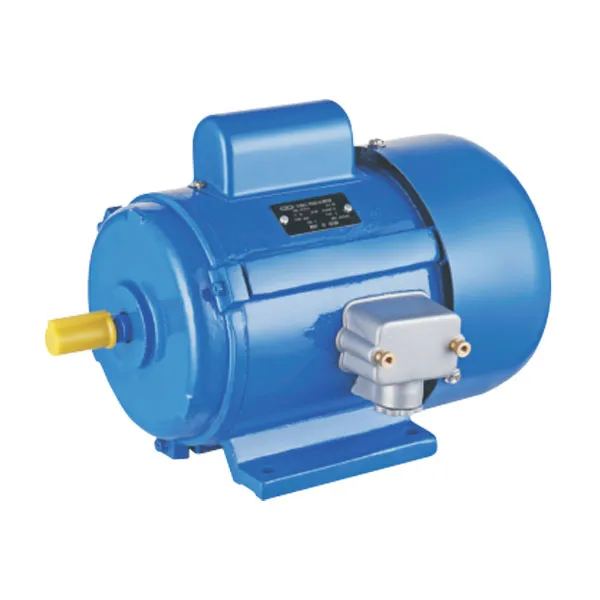
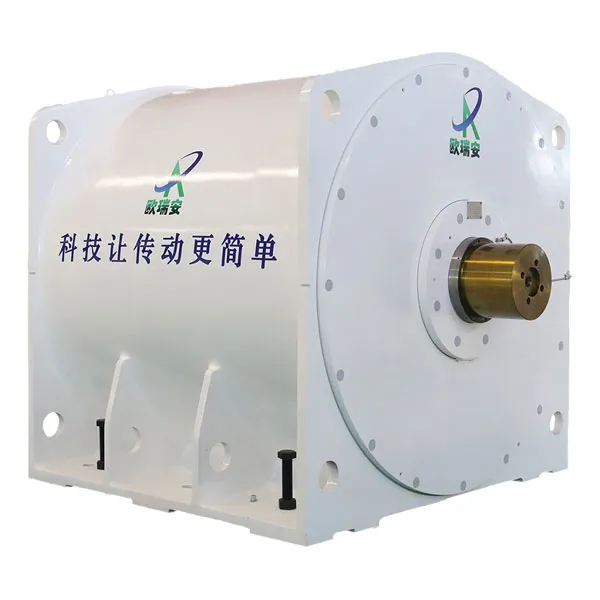
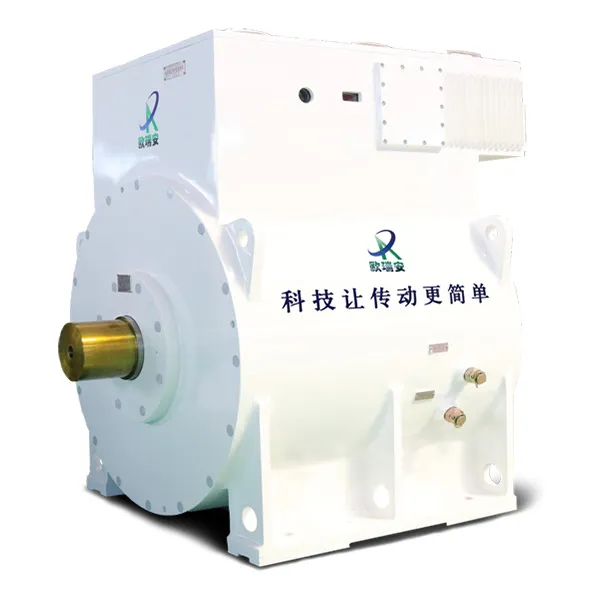
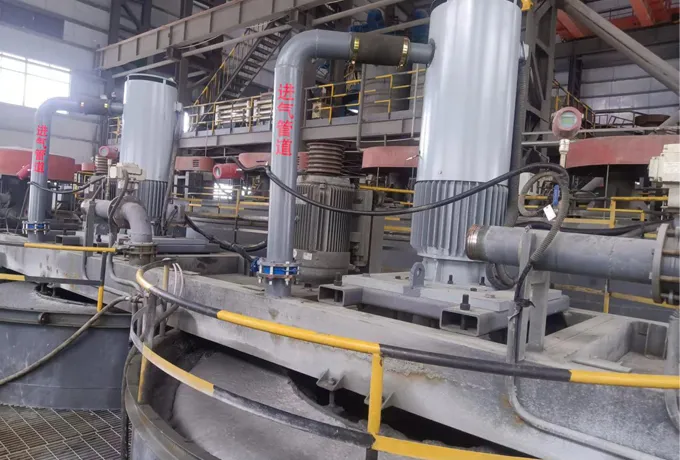
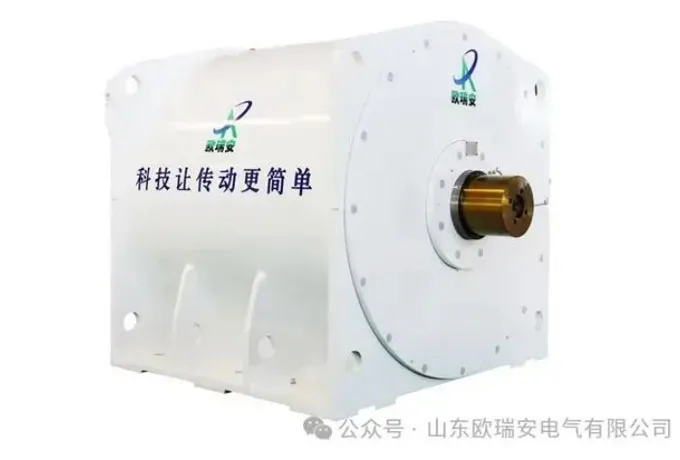
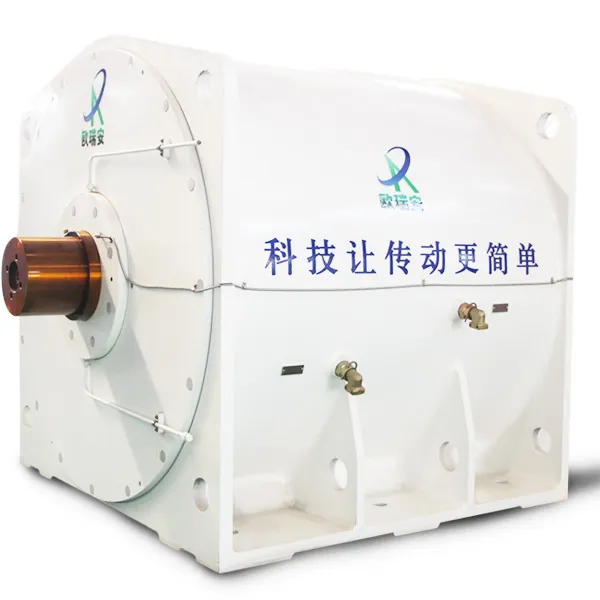
In 2026, machine builders across extrusion, injection molding, and pump packaging are facing a consistent design constraint: more output is required from tighter footprints, lighter structures, and faster installation timelines. The permanent magnet motor has moved from a premium niche option to a mainstream engineering choice precisely because its high power density allows designers to reduce motor frame size and overall machine weight without sacrificing torque or speed range. For procurement teams evaluating options and tracking ipm motor price across suppliers and configurations, the 2026 question is no longer whether permanent magnet technology delivers a size and weight advantage—it demonstrably does—but how to specify the right configuration to capture that advantage without introducing integration surprises or cost overruns.
The pain point driving this conversation is straightforward. A conventional induction motor sized for the same continuous output as a permanent magnet motor typically occupies one to two frame sizes larger, carries significantly more mass, and generates more rotor heat under load. In a compact extrusion line where the motor sits directly on the barrel assembly, or in an injection molding cell where floor space is allocated to the millimeter, or in a skid-mounted pump package where lifting class determines installation cost, that frame size and weight difference is not an abstract specification detail—it is a direct constraint on what the machine can be and what it costs to build, ship, and install.
This guide provides a practical framework for machine builders and procurement engineers to evaluate permanent magnet motor specifications, understand what drives configuration cost, and select the right motor-drive combination for compact, high-performance industrial applications.
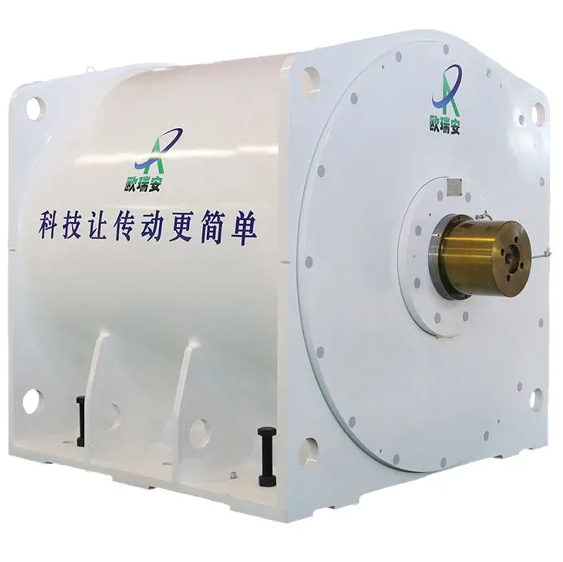
Why Traditional Motors Hold Back Compact Machine Integration
The Space and Weight Penalty of Conventional Induction Motors
The induction motor's operating principle requires rotor copper or aluminum conductors to carry induced currents that generate the rotor magnetic field. Those conductors, and the rotor mass required to support them, are the primary reason induction motors are physically larger and heavier than permanent magnet alternatives at equivalent power ratings. The rotor copper losses also generate heat that must be managed through larger cooling structures, which further increases frame size.
For machine builders, the consequences of this size and weight penalty compound across the machine design. A larger motor frame requires a longer or wider base structure, which increases the structural steel content of the machine. More mass at the motor end of the machine increases the load on mounting surfaces, foundations, and lifting equipment. In enclosed machine designs, the additional heat load from rotor losses increases the cooling and ventilation requirement inside the enclosure. Each of these secondary effects adds cost and complexity that is not visible in the motor unit price but is very visible in the total machine cost and installation budget.
What "Smaller Machine" Really Means for OEMs
For OEM machine builders, the value of a smaller motor frame is not just aesthetic. A one-frame-size reduction in motor envelope can enable a shorter machine base, which reduces structural steel content and floor space requirement. It can simplify enclosure design by reducing the volume that needs to be cooled and accessed for maintenance. It can reduce the lifting class required for installation, which lowers rigging cost and may eliminate the need for specialized lifting equipment at the customer site. It can improve service access by creating more clearance around adjacent components.
These are engineering and commercial advantages that translate directly into machine competitiveness—lower build cost, easier installation, and a smaller footprint that customers in space-constrained facilities will pay a premium for.
Permanent Magnet Motor Power Density: How the Size Reduction Works
Where the Frame Size Reduction Comes From
The fundamental mechanism behind the permanent magnet motor's size advantage is the elimination of rotor copper losses. In an induction motor, the rotor magnetic field is created by induced currents flowing through rotor conductors. Those currents generate heat—rotor copper losses—that must be dissipated and that reduce the motor's overall efficiency. In a permanent magnet motor, the rotor field is provided by the permanent magnets themselves, with no rotor current required. The result is a rotor that generates no copper losses, runs cooler, and can be designed for higher torque density within the same thermal envelope.
Higher torque density means that a permanent magnet motor can deliver the same continuous torque output as a larger induction motor within a smaller physical frame. In practical terms, this typically translates to a one-to-two frame size reduction for the same power rating—a difference that is immediately visible in the motor's physical dimensions and weight, and that propagates through the machine design as described above.
The efficiency advantage compounds the size benefit. Because the permanent magnet motor operates at higher efficiency across its load range, it generates less heat per unit of output power. Less heat means less cooling structure is required, which further reduces frame size and weight relative to an induction motor of equivalent output.
IPM Architecture and Its Relevance to Configuration and Cost
The Interior Permanent Magnet (IPM) motor is a specific rotor architecture in which the permanent magnets are embedded inside the rotor lamination stack rather than mounted on the rotor surface. This design provides several performance advantages relevant to industrial machine applications: higher mechanical robustness at elevated speeds, the ability to use reluctance torque in addition to magnet torque for higher peak torque capability, and a wider constant-power speed range through field weakening operation.
For machine builders specifying motors for variable-speed applications with wide speed ranges—such as extruders that operate across a range of screw speeds, or pump packages that need to cover a wide flow range—the IPM architecture's field weakening capability is a meaningful performance advantage. It is also a cost variable: the rotor design complexity of an IPM motor, combined with the magnet grade and embedding process, influences the final configuration cost. Understanding what drives ipm motor price—magnet grade, rotor complexity, speed range, and customization level—allows procurement teams to make informed trade-offs between performance and cost at the specification stage.
Key Specifications and Configurations That Drive Size Savings and IPM Motor Price
The following table summarizes the key specification parameters for permanent magnet motor selection in compact machine applications, with notes on their influence on both performance and cost:
| Specification Parameter | What to Define | Influence on Size/Weight | Influence on IPM Motor Price |
|---|
| Rated power (kW) | Continuous output requirement at rated speed | Primary frame size driver | Direct cost driver; higher power = larger motor |
| Rated torque and peak torque | Continuous and peak torque at the shaft | Determines rotor sizing and magnet volume | Peak torque requirement increases magnet grade and rotor complexity |
| Speed range | Base speed and maximum speed | Wide range favors IPM architecture | Field weakening range increases control and rotor design complexity |
| Duty cycle | S1 continuous vs intermittent duty | Affects thermal sizing and frame selection | Intermittent duty may allow smaller frame at same peak output |
| Cooling method | TEFC, forced air, liquid cooling | Liquid cooling enables smallest frame for given power | Liquid cooling adds cost; TEFC is simpler and lower cost |
| Mounting and shaft | Flange type, shaft diameter, shaft height | Must match existing gearbox or coupling interface | Custom shaft/flange increases cost; standard interfaces reduce it |
| IP rating | IP54, IP55, IP65, or higher | Higher IP adds sealing mass but is minor vs frame size | Higher IP rating adds modest cost |
| Insulation class | Class F or H | Affects thermal margin in high-ambient environments | Class H adds marginal cost |
| Feedback device | Encoder, resolver, or sensorless | Encoder/resolver adds length to motor package | Encoder/resolver adds cost; sensorless reduces it |
| Efficiency class | IE4 or IE5 target | Higher efficiency enables smaller thermal envelope | Higher efficiency targets increase magnet grade and cost |
Drive and Control Pairing: The Hidden Sizing Lever
The permanent magnet motor does not operate in isolation—it requires a compatible variable frequency drive (VFD) configured for PM or IPM control. The drive selection and configuration have a direct influence on the effective size and performance of the motor system:
A drive configured for field-oriented control (FOC) of an IPM motor can extract the full torque density advantage of the motor architecture, including reluctance torque contribution, which allows the motor to be sized smaller for the same peak torque requirement. A drive that is not properly tuned for the motor's electrical parameters will not achieve the rated performance, effectively negating the size advantage.
For machine builders specifying a permanent magnet motor system, the drive-motor pairing should be confirmed at the specification stage, not after the motor is selected. Key drive parameters to confirm include: VFD power rating and current capacity, PM/IPM control algorithm availability, feedback device compatibility, field weakening parameter range, and braking resistor or regenerative braking provision if the application involves rapid deceleration.
Where a Permanent Magnet Motor Makes the Biggest Difference: Application Scenarios
Space-Constrained, Continuous-Duty Industrial Equipment
| Application | Space Constraint | Weight Constraint | Key Performance Requirement |
|---|
| Extruders | Motor mounted on barrel assembly; tight base length | Cantilevered motor mass affects base deflection | High continuous torque at low-to-mid speed; wide speed range |
| Injection molding machines | Compact cell layout; motor integrated into machine frame | Machine weight affects floor loading and transport class | High peak torque for injection; fast dynamic response |
| Pump skids and booster stations | Skid footprint limited by installation space | Lifting class determines installation equipment requirement | Continuous duty at variable flow; high efficiency across load range |
| Compressor packages | Integrated drive-motor package in tight enclosure | Package weight affects structural support requirement | Wide speed range; high efficiency at part load |
| Conveyor and material handling drives | Motor integrated into drive head; space at premium | Elevated installation; lower weight reduces structural load | Constant torque across speed range; reliable continuous duty |
What to Measure in Each Scenario
For machine builders evaluating the size and weight benefit of a permanent magnet motor in a specific application, the relevant measurements are:
Footprint reduction: compare base length and width with the induction motor alternative; quantify the structural steel saving in kilograms and cost
Weight reduction: compare motor mass; determine whether the reduction changes the lifting class required for installation and what that saves in rigging cost
Energy consumption: compare efficiency at the actual operating point (not just rated efficiency); calculate annual kWh saving at the application's duty cycle hours per year
Heat load in enclosed spaces: compare motor losses at the operating point; determine whether the reduction allows a smaller cooling or ventilation system in the machine enclosure
Installation and Selection Guide: Downsizing Without Surprises
A 6-Step Selection Workflow
Step 1: Confirm load type and torque-speed profile Define the continuous torque requirement, peak torque requirement, base speed, maximum speed, and duty cycle (S1 continuous or intermittent). Include the full load profile—not just the rated point—because the motor must be thermally sized for the actual duty cycle, not the nameplate peak.
Step 2: Define installation constraints Specify the maximum motor envelope (length, diameter, or frame size limit), mounting pattern (flange type and bolt circle), shaft height, shaft diameter, and coupling or gearbox interface dimensions. These constraints define the design space within which the motor must fit.
Step 3: Choose motor architecture For applications with a wide speed range or high peak torque requirements, the IPM architecture is typically the appropriate choice. For applications with a narrow speed range and moderate peak torque, a surface PM design may offer a simpler and lower-cost solution. Confirm the architecture choice with the motor supplier before finalizing the drive selection.
Step 4: Match the VFD and feedback device Confirm VFD compatibility with the selected motor architecture (PM or IPM control algorithm), feedback device type (encoder, resolver, or sensorless), braking provision, and EMI filtering requirements for the installation environment.
Step 5: Validate thermal margin Confirm that the motor's thermal rating is adequate for the ambient temperature at the installation point, the enclosure temperature rise, and the duty cycle. For liquid-cooled motors, confirm coolant flow rate and temperature. For TEFC motors, confirm that airflow at the motor surface is not obstructed by the machine enclosure.
Step 6: Finalize compliance and documentation Confirm efficiency class targets (IE4 or IE5 if required), test report requirements, and any market-specific certification or documentation needs. For export machine builders, confirm that the motor's efficiency marking is compatible with the target market's regulatory requirements.
What to Send in an RFQ for an Accurate Recommendation
To receive a configuration recommendation that accurately reflects the application requirements, provide: mechanical envelope limit (maximum frame size or dimensions), required continuous power and torque, peak torque requirement, speed range (base speed and maximum speed), duty cycle, supply voltage and frequency, cooling method preference, IP rating requirement, mounting flange type and shaft dimensions, gearbox or coupling interface details, feedback device preference, ambient temperature, and target efficiency class.
Maintenance and TCO in 2026: Compact Design That Pays Back
Maintenance Considerations for Permanent Magnet Motors
Permanent magnet motors have fewer wear components than induction motors—no rotor conductors to degrade, no slip rings, and no brushes in standard designs. The primary maintenance items are:
Bearing life and lubrication: in high radial load applications (direct belt drive, overhung load), bearing selection and lubrication interval are the primary service life variables; confirm bearing load rating against the actual radial and axial loads in the application
Alignment and coupling quality: smaller shaft diameters in compact PM motors are more sensitive to misalignment-induced bending loads; precision alignment at installation and periodic re-check are important for bearing and shaft life
Drive parameter management: PM and IPM motors require correctly configured drive parameters for stable operation; parameter drift or incorrect tuning can cause instability or derating; periodic drive parameter verification is recommended
Condition monitoring: vibration monitoring at the motor bearings provides early warning of bearing degradation; temperature monitoring at the motor housing provides early warning of cooling system degradation or overload conditions
TCO Model: Where the Savings Come From
| Cost Category | Source of Saving | Typical Magnitude |
|---|
| Structural steel and machine base | Smaller motor frame enables shorter/lighter base | Significant for large machines; quantify per project |
| Installation and rigging | Lower motor mass reduces lifting class and rigging time | Meaningful for heavy motors; calculate from weight delta |
| Energy cost | Higher efficiency reduces kWh consumption at operating point | Calculate from duty cycle hours/year and local kWh rate |
| Cooling and ventilation | Lower motor losses reduce heat load in enclosed spaces | Relevant for compact enclosures; may allow smaller cooling system |
| Maintenance frequency | Fewer wear components; longer bearing life in well-aligned installations | Reduced maintenance labor and parts cost over service life |
Conclusion: The Right Motor Frame Size Is an Engineering and Commercial Decision
If your 2026 machine design is constrained by motor envelope and weight, a permanent magnet motor is a practical and well-proven path to higher power density—typically enabling a one-to-two frame size reduction and meaningful weight saving compared with a conventional induction motor at the same power rating. For extruders, injection molding machines, and pump packages where space, weight, and installation cost are active design constraints, that size advantage translates directly into a more competitive machine.
To capture the full benefit, evaluate the complete configuration—motor architecture, drive pairing, duty cycle, and thermal margin—and request a clear breakdown that explains the final ipm motor price in terms of the specific design choices driving it. The unit price is one input to the TCO calculation; the structural steel saving, the rigging cost reduction, and the annual energy saving are the others.
Request a Recommended Configuration and Quotation
Share your machine and process requirements using the details below, and our engineering team will recommend the correct permanent magnet motor configuration, drive pairing, and frame size for your application — with pricing matched to your production scale and volume.
Working conditions: Application type (extruder, injection molding, pump, compressor, or other), load type (constant torque or variable torque), continuous and peak torque requirement, speed range (base speed and maximum speed), duty cycle, supply voltage and frequency, cooling method, ambient temperature, and IP rating requirement.
Quantity and capacity: Number of motors per machine, number of machines per order, and whether the application is prototype, pilot production, or series production.
Size and specification: Maximum motor envelope or frame size limit, mounting flange type and bolt circle, shaft diameter and length, coupling or gearbox interface dimensions, and feedback device requirement (encoder, resolver, or sensorless).
Target metrics: Footprint or weight reduction target versus current motor, efficiency class target (IE4 or IE5), noise and vibration limits, speed range and field weakening requirement, and any market-specific certification or documentation requirements.
Current problems: Space limitation preventing machine integration, overheating in enclosed machine enclosure, heavy base structure increasing installation cost, high energy consumption at continuous duty operating point, or dynamic response limitations from high rotor inertia.
FAQ
1. What is a permanent magnet motor?
A permanent magnet motor is an electric motor in which the rotor magnetic field is provided by permanent magnets embedded in or mounted on the rotor, rather than by induced rotor currents as in an induction motor. The absence of rotor copper losses results in higher efficiency and higher torque density—more torque per unit of motor volume and mass—compared with conventional induction motors at equivalent power ratings. When looking for a permanent magnet motor for sale, it is important to note that these motors are available in surface PM and interior PM (IPM) rotor architectures, each with different performance characteristics suited to different application requirements.
2. Permanent magnet motor vs. induction motor — what is the difference for machine builders?
<p style="margin: 0px 1em 1rem; padding: 0px; color: rgb
 English