In scraper conveyor applications, motor selection is not simply a matter of matching rated power. Heavy-duty conveying systems often operate under demanding conditions, including high starting loads, frequent start-stop cycles, fluctuating material resistance, and long running hours. Under these conditions, the wrong motor can lead to unstable startup, unnecessary mechanical stress, higher energy consumption, and increased maintenance requirements.
That is why more buyers and engineers are evaluating permanent magnet motors as an alternative to conventional drive solutions. A properly matched permanent magnet motor can improve low-speed torque performance, simplify the transmission structure, support variable frequency control, and reduce long-term operating costs. However, choosing the right model still requires a practical, application-based approach.
This article explains what buyers should look at when selecting a permanent magnet motor for scraper conveyors, and how to make a decision that supports efficiency, reliability, and long-term system stability.
Why Motor Selection Matters in Scraper Conveyor Systems
Scraper conveyors are widely used in mining, bulk material handling, and other heavy-duty industrial environments. Unlike lighter conveying systems, scraper conveyors usually require strong torque output at low speed and must continue operating under variable and sometimes harsh load conditions.
In this type of application, a motor that looks acceptable on paper may still perform poorly in the field if it cannot deliver enough torque at startup, respond well to load changes, or integrate smoothly with the control system. This is why motor selection should be based on actual operating requirements rather than on nameplate power alone.
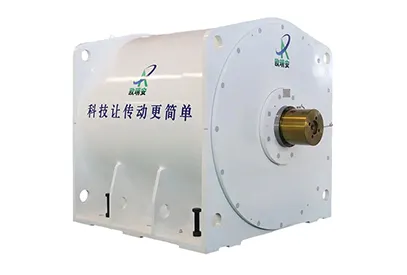
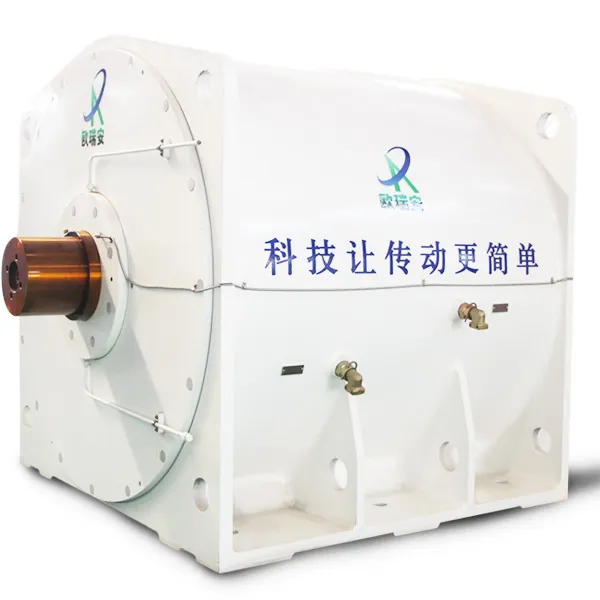
A permanent magnet motor designed for scraper conveyors is typically valued for several reasons:
strong low-speed high-torque output
direct drive capability
variable frequency control compatibility
high energy efficiency
reduced transmission complexity
lower maintenance requirements
When these advantages are matched correctly to the application, the result is not just a more efficient motor, but a more effective conveying system.
Start with the Real Operating Conditions
The first step in choosing a permanent magnet motor is to define the actual working conditions of the scraper conveyor. This sounds obvious, but it is where many selection mistakes begin.
Before comparing models, buyers should clearly understand:
the type of material being conveyed
conveyor length and inclination
expected throughput
operating hours per day
startup frequency
whether loaded restart is required
shock load severity
site voltage and control conditions
These factors directly affect the torque requirement, speed range, control strategy, and motor sizing.
For example, a scraper conveyor handling dense bulk material in a mining environment will place very different demands on the motor than a conveyor handling lighter materials with relatively stable load. If the application involves heavy startup resistance or fluctuating load, torque reserve becomes much more important than a simple power match.
A good selection process begins with the conveyor’s real duty profile, not with a standard catalog list.
Focus on Torque, Not Just Rated Power
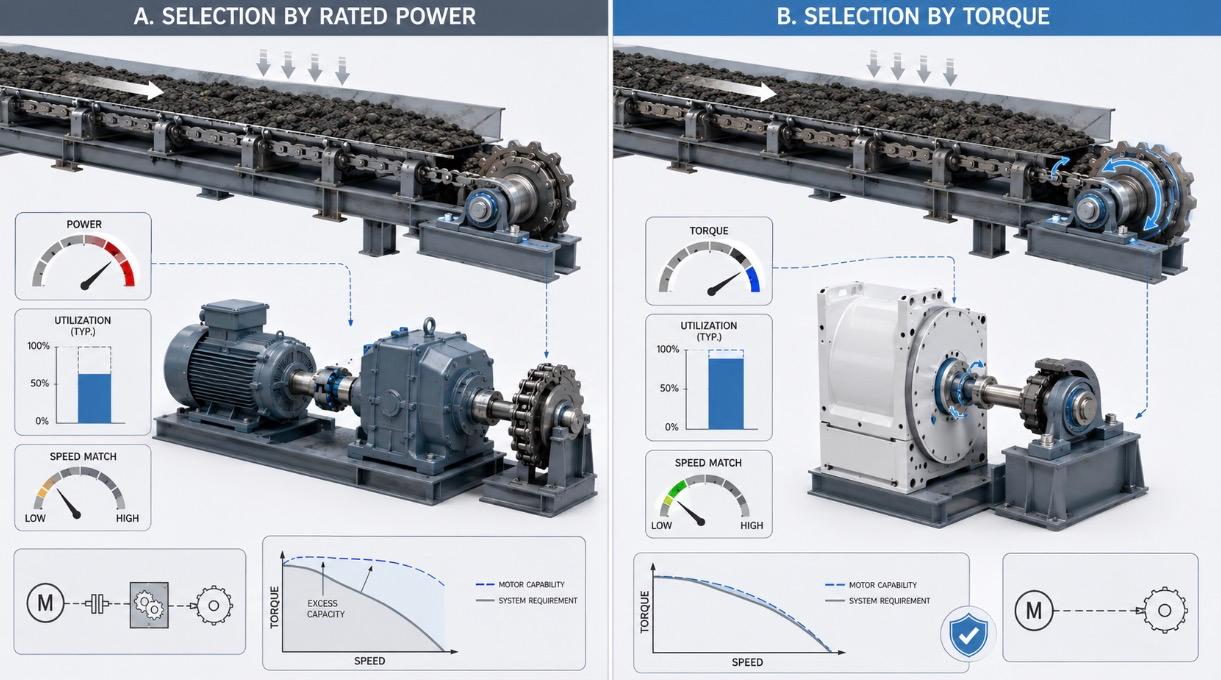
One of the most common mistakes in conveyor motor selection is focusing only on kilowatts. Rated power is important, but for scraper conveyors, torque is often the more critical factor.
At low speeds, the conveyor still needs enough torque to move material consistently and start smoothly under load. If the motor meets the rated power requirement but cannot provide adequate starting torque or overload margin, the system may experience:
difficult startup
unstable running performance
higher mechanical stress
reduced service life of connected components
more frequent faults or shutdowns
This is why torque-based selection is usually more reliable than power-only selection.
For scraper conveyor applications, a permanent magnet motor should be evaluated according to the required torque at the actual operating speed. Once that is clear, the appropriate motor model can be narrowed down more accurately.
In practical terms, this means buyers should ask not only, “What is the motor power?” but also, “What torque can it deliver at the speed we actually need?”
Check Starting Torque and Overload Capacity
Heavy-duty scraper conveyors often face challenging startup conditions. Material load, chain resistance, environmental factors, and operating habits can all increase the demand placed on the drive system during startup.
For this reason, starting torque and overload capacity should always be checked carefully.
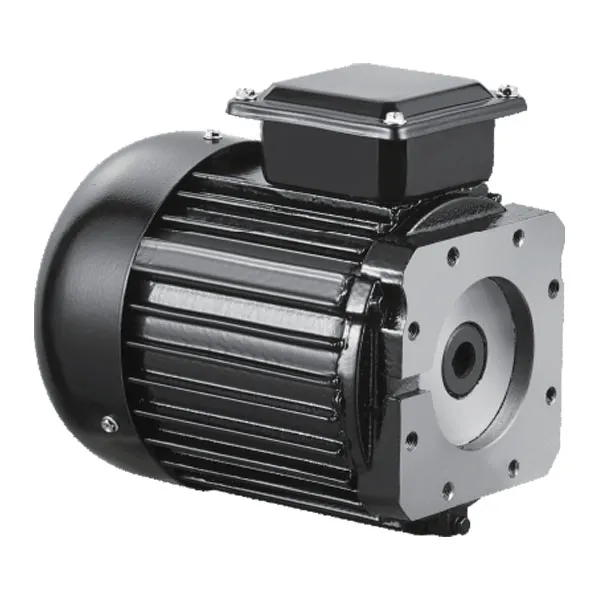
A well-designed permanent magnet motor for scraper conveyors should offer enough torque reserve to handle demanding conditions without excessive strain on the system. In the case of the referenced product, the motor is designed with starting torque up to 2.2 times rated torque and overload torque up to 2 times rated torque. This provides a stronger basis for dealing with difficult starts and temporary overload conditions.
These values matter because they help answer several practical questions:
Can the conveyor start more smoothly under load?
Can the system tolerate short-term resistance spikes?
Will the motor still perform reliably when operating conditions are less than ideal?
For buyers, this is not just about performance. It is also about reducing risk during commissioning and daily operation.
Evaluate Efficiency as Part of the Whole Drive System
Energy efficiency is an important consideration in modern industrial motor selection, but efficiency should not be evaluated in isolation.
In scraper conveyor projects, the real value comes from the efficiency of the entire drive arrangement. A permanent magnet motor may provide high motor efficiency, but the total system benefit becomes more meaningful when the drive structure is also optimized.
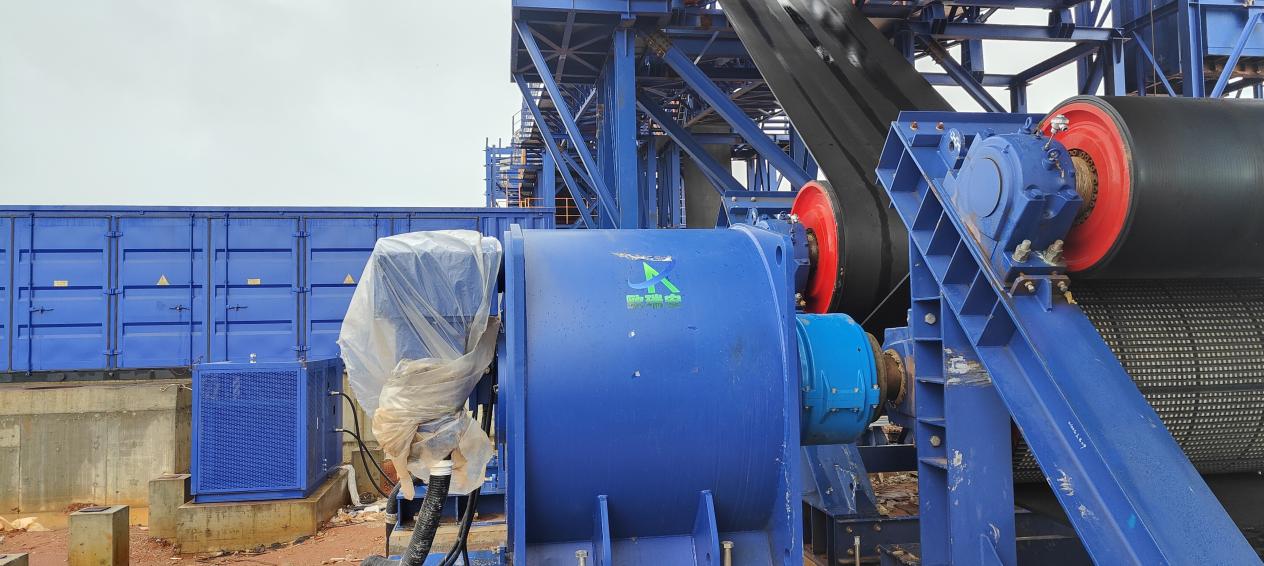
A permanent magnet motor solution for scraper conveyors is often selected because it supports direct drive architecture. By reducing or eliminating intermediate transmission devices such as reducers and mechanical soft starters, the system can become simpler and more efficient. Fewer transmission stages also mean fewer points of mechanical loss.
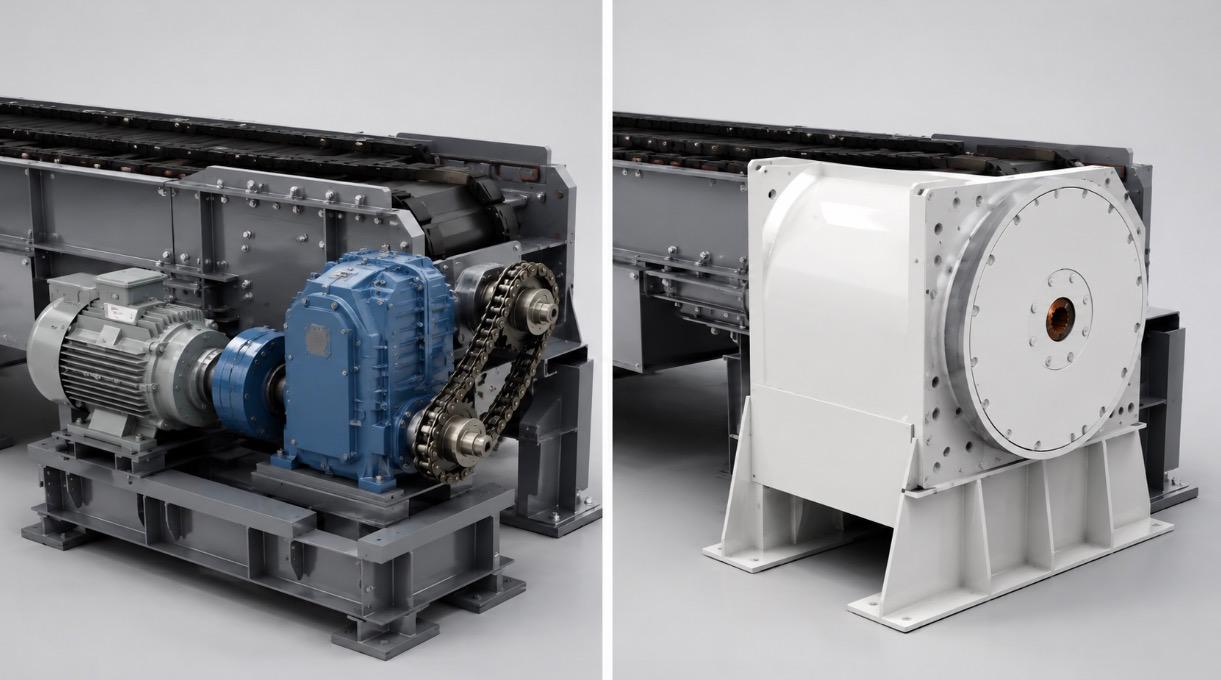
The referenced motor is positioned at the IE5 efficiency level and designed for direct-drive use. For buyers, this means the discussion should not stop at motor efficiency alone. It should include broader questions such as:
Can the drive chain be simplified?
Can transmission losses be reduced?
Can the system respond more efficiently to variable operating demand?
Can energy savings be achieved without sacrificing torque performance?
The best result comes when motor efficiency and system architecture work together.
Consider Variable Frequency Control and Dynamic Power Matching
Modern scraper conveyor systems often benefit from more precise control, especially when operating loads are not constant. That is why control compatibility should be part of the selection process.
A permanent magnet motor paired with intelligent variable frequency control can provide smoother startup, lower starting current, and more flexible output matching. In practical terms, this can help the conveyor respond better to changing material loads while reducing electrical and mechanical shock.
For heavy-duty conveying applications, this kind of control strategy can improve:
startup stability
operating smoothness
system protection
power matching accuracy
overall operational efficiency
Instead of treating the motor as an isolated component, buyers should evaluate it as part of a complete drive solution. A motor that works well with variable frequency control is often better suited to the real needs of scraper conveyor systems than a more conventional fixed-speed alternative.
Do Not Ignore Maintenance Requirements
In many industrial projects, the true cost of a motor is not defined by purchase price alone. Maintenance burden, downtime risk, and service complexity can have a major impact on total cost of ownership.
This is especially relevant in scraper conveyor applications, where operating environments may be harsh and access for maintenance may be limited.
One advantage of a direct-drive permanent magnet motor is that it can reduce dependence on intermediate transmission components. Fewer mechanical parts generally mean fewer wear points, less lubrication complexity, and lower maintenance workload.
According to the product design information, the motor requires only one bearing lubrication every 3000 operating hours, and overall maintenance can be reduced significantly because intermediate transmission devices are removed.
For buyers, this should be considered in practical terms:
Will the new motor reduce routine maintenance work?
Can it help lower unplanned downtime?
Will it simplify the mechanical system for the maintenance team?
Can it reduce long-term service costs?
In many cases, the maintenance advantage is one of the strongest reasons to upgrade to a permanent magnet motor solution.
Verify Voltage, Frame Size, and Installation Dimensions
Even a technically suitable motor can become the wrong choice if it does not match the installation environment.
Once torque, speed, and control requirements are clear, the next step is to confirm:
site voltage
compatible frame size
mounting structure
overall external dimensions
available installation space
weight and layout limitations
This is where detailed product data becomes especially valuable. A selection process supported by torque references, voltage classes, frame-size information, and external dimensions is more reliable than one based only on general performance claims.
For engineering teams and buyers, the most practical approach is usually:
1. confirm required torque and working speed
2. verify the site voltage and electrical conditions
3. narrow down the compatible motor frame
4. check installation dimensions before quotation and final approval
This helps prevent costly rework later in the project.
Choose a Supplier That Understands the Application
In B2B industrial purchasing, the best motor is rarely the one with the most aggressive marketing language. It is the one that is correctly matched to the application.
A reliable supplier should be able to support more than just model recommendations. They should also be able to discuss:
This kind of application-based support is especially important for scraper conveyors, where the motor influences not only power delivery but also overall system design.
When evaluating suppliers, buyers should look for those who can provide clear technical references and communicate from an engineering perspective, not only from a catalog or pricing perspective.
Conclusion
Choosing a permanent magnet motor for a scraper conveyor should begin with the real operating conditions of the conveyor, not with a generic motor list. Buyers need to evaluate torque demand, startup performance, overload capacity, efficiency, control compatibility, maintenance requirements, and installation constraints as one complete decision process.
For heavy-duty scraper conveyor systems, a direct-drive permanent magnet motor with low-speed high-torque capability and variable frequency control can offer clear advantages over a conventional solution selected by rated power alone. It can help improve operating stability, reduce transmission complexity, support energy-saving goals, and lower long-term maintenance pressure.
If your project involves mining, bulk material handling, or other demanding conveying conditions, the right permanent magnet motor should not simply fit the specification sheet. It should fit the application.
For a more accurate model recommendation, it is best to evaluate the conveyor’s actual operating parameters and match the motor accordingly.
 English